
Consecutive interpreting only requires two tools: a writing instrument and something to write on. For many interpreters, that means a pen and a notepad. Years ago, I graduated from bargain basement pens with all their ink flow issues and smudginess to the Jetstream. The impact of having a pen that I knew was highly valued by other interpreters and one that felt like a quality pen to me was significant. It is the pen I trust, and using the multi-color + pencil version means I know I’ll practically never be stuck with a dead pen mid-interpreting (I still always carry a backup, though). After all, the interpreter physically controls everything about the pen while the paper an interpreter writes on merely sits there. Except the paper can absolutely have an impact on interpreter performance.
Back when I first began working as an in-house interpreter, I had zero experience and zero training. Everything I learned came from trial and error, or from tips I received from my supervisor who also learned everything on the job with no formal training. Day one, I picked up the standard 8×11 notebook and a pen and basically did dictation. My brain was drowning in information, my hand was perpetually cramped from trying to write every word, and my eyes were constantly squinting with the effort of reading messy handwriting. Of course, part of the problem is simply that I didn’t know any better. But I am convinced that part of that “technique” also came from the fact that an 8×11 notebook is virtually designed for writing whole sentences—never mind the fact that that is exactly how I used notebooks throughout elementary and high school and beyond. It wasn’t until a few years later, while attending the now defunct Summer Intensive Interpreter Training Program at the Center for Interpretation and Translation Studies at the University of Hawaiʻi at Mānoa that I really understood that an interpreter cannot, should not try writing down every last word. Instead of 8×11 notebooks, we used steno pads. The change in the paper size combined with learning the Rozan method of notetaking was transformative.
First, most steno pads are 6×9 and come Gregg ruled (meaning there are 3 lines per inch and another line bisecting each page down the middle). Having two columns helped/forced me to be more critical in the information I wrote down, and the Rozan method made it easier for me to know what I should be writing down in the first place. I have been using steno pads for years now and until recently, believed I had no complaints. Then I enrolled in a master’s level interpreter training program and got to work with several other interpreters and instructors. During the first semester of the program, students and instructors alike talked about how they take notes, what works, what doesn’t, and often shared samples of their notes with each other. I learned a plethora of new ideas for better notetaking that went beyond the Rozan method, yet I found myself wondering if changing my current tools (i.e., notebook) would further improve my notetaking. That’s when I finally decided to take the plunge and try reporter’s notebooks.
I found several options for reporter notebooks on Amazon and since I was shopping for variety, my only requirements were that the notebooks matched the reporter notebook dimensions (4×8 inches); were top, spiral bound; and come in small quantities (I did not want to invest in a dozen notepads if I ended up absolutely loathing them). I also thought this would be a great opportunity to explore other types of rule (since the steno pads I’ve used for years always come Gregg ruled), but there was not a great number of affordable options for reporter notebooks with plain paper, graph paper, or dot grid paper. Ultimately, I ended up with four different styles of notebook. Keep reading for my evaluation of the pros and cons as I experienced them and photos of how well these notebooks held up.
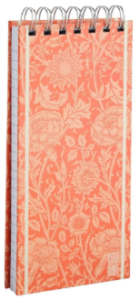
Manufacturer: The Gifted Stationery Company (Note: The company’s own website does not seem to list these)
Amazon link ($16.99/3pk as of June 2025)
Product: Top spiral bound, hard cover, skinny notebook
Specs: 100 sheets/200 pages1, unperforated, ruled, 3.75×8.4 inches
(This image is from the Amazon website linked above)
The Good
These notebooks have hard covers, on par with a hardback book. This was great for instances where I had to interpret while standing on the factory floor at work. Also, since it can get very warm on the production floor and my hands tend to sweat, the hard backing stayed rigid. Steno pads with a cardstock backing that I’ve used have wilted under such conditions or started “pilling.” The pages flipped easily and I never had concerns about catching two pages at once.
Also, I really enjoyed the William Morris design on these notebooks.
The Iffy
The covers do add some weight to the notebook. The rigidness can also make it difficult to slide into a pocket. Finally, I have used two of the three Gifted Stationery notebooks I bought. I had zero issues with flipping pages with the first one, no matter where in the notebook (sheet 1 versus sheet 99) I was writing. I always flip pages in one direction (i.e., only write on the “front” of the sheet); when I get to the end of the notebook, I simply flip it over and write in the other direction to use up all the pages without flipping pages AND the notebook itself. On my second notebook, however, the paper started to “buckle” around the rings of the spiral. I found this incredibly distracting, but there was no amount of straightening I could do to correct this. Once this buckling started, the notebook would no longer really close; there would be about an inch of space between the bottom free edge of the covers. This was not a complete dealbreaker, but it would be cumbersome if I had need to close the notebook and slip it in my pocket or a small bag. This also caused the free edges of the pages to fan out slightly which may cause some issues when trying to turn pages.
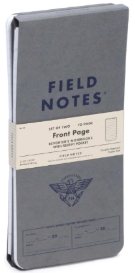
Manufacturer: Field Notes
Amazon lnk ($16.95/2pk as of June 2025)
Product: Top spiral bound, soft cover with pocket, skinny notebook
Spec: 70 sheets/140 pages, unperforated, ruled, 3.75×8 inches
(This image is from the Amazon website linked above)
The Good
This notebook looks and feels very slick and well produced. This came in a two-pack; the first notebook I tried I felt like the paper was much thicker than the steno pad paper I was used to. Early in this experiment, I was concerned that I would accidentally flip two sheets (or more) at once. After several weeks of using reporter notebooks (all of which were higher quality than the standard office supply steno pads available at my workplace), I got accustomed to the better-quality paper and wasn’t concerned about skipping whole sheets.
Unlike The Gifted Stationery (GS), this notebook has cardstock covers. The cover is a one-piece construction that wraps from back-to-front. The back cover has a pocket; you could keep business cards or small vocab lists in there or maybe use it as an extra way to demarcate sections of notes (rather than tucking sections of paper between the fingers of the hand holding the notebook). There are quick references on the inside covers including US time zones, a gloss of newspeak terms (“Talk like Ben Bradlee”), proofreading marks, and more.
The Iffy
If you are not used to high-quality paper, you may go to flip a sheet in this notebook and wonder if you’ve caught two sheets at once. The cardstock cover was sturdy enough, but definitely more flimsy than the GS. Since neither cover is anything like the sturdy if rough cardboard of the standard steno pad, I’m not sure it would hold up to sweaty hands in hot environments.
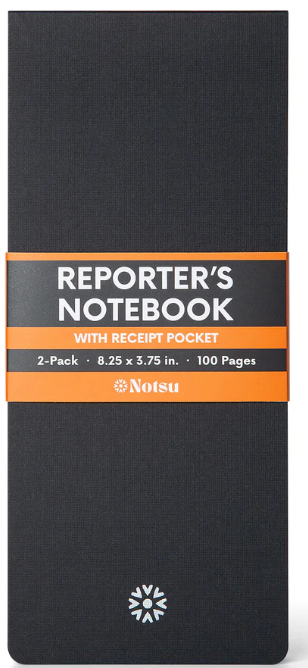
Manufacturer: Notsu
Amazon link ($15.99/2pk as of June 2025)
Product: Top spiral bound, soft cover with pocket, skinny notebook
Spec: 100 pages2, ruled, 3.75×8.25 inches, 120 gsm
(This image is from the manufacturer’s website linked above)
The Good
The spiral-bound edge of this notebook stayed in pristine condition even after weeks of use. It even survived “the big flip,” when I finished using the observe side of each sheet and started using the reverse side of each sheet. The rules (lines) on the pages were much wider-set and fainter in color compared to the other notebooks. This may have influenced the information density on the page for me, leaving a very clean bound-edge at the end of the notebook’s useful life. This is a small detail, but I do like being able to close a notebook without the spiral bound edge being so frayed that the top cover cannot close. I also liked how the very last line of every page is reserved for the date. It’s unassuming and could be incredibly helpful. I often note the date in my practice notebooks but at the top of the page, which means I have to fully open each page to check dates. Having that at the bottom makes much more sense for date tracking.
The Iffy
Unlike my experience with Field Notes, the sheet-flipping experience actually worsened the more sheets I flipped. Half the time, I found myself thumbing the corner trying to unstick two sheets only to look down—and sometimes, actually rubbing the paper between my thumb and index finger—and see that I only had one sheet. In a fast-paced work environment, this would be too distracting to be practical for me. Even in slower-paced settings, I would be afraid of subconsciously fidgeting with the free edge.
Also, I happened to note the first (2/7/2025) and last (2/18/2025) day I used this notebook. Ten days feels like a pretty short useful life which is probably at least partly due to how wide the rules are. For the cost conscious among us, paying around $8.00 for a notebook that may not last two weeks may make this a suboptimal choice.
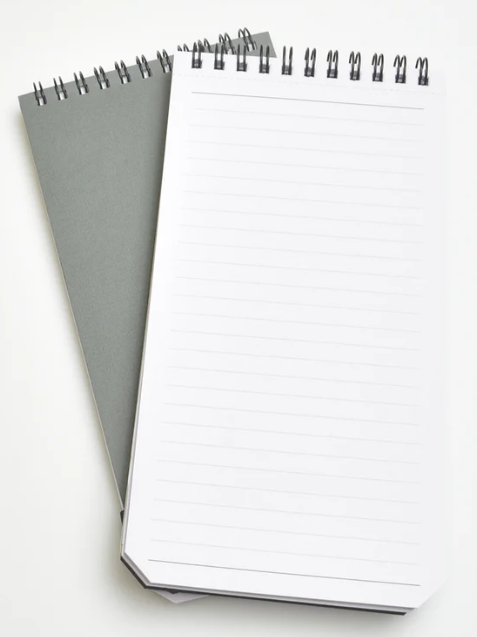
Manufacturer: Franklin-Christoph (lined and dot grid available)
Amazon link ($16.50/2pk as of June 2025)
Product: Top spiral bound, soft cover with pocket, skinny notebook
Spec: 60 sheets/120 pages, ruled, 4×8 inches, 90 gsm
(This image is from the manufacturer’s website linked above)
The Good
This notebook hit the sweet spot for me. The paper was thick and high quality, but not distractingly so. Flipping pages was a breeze and the spiral-bound edge was almost as pristine as the Notsu notebook so it was easy to fully close at any time. Although I personally do not find them useful, this was the only notebook with perforated pages so full sheets of paper can be cleanly removed from the notebook. I personally found the color of the paper pleasing as well—it has a very subtle purplish-gray tone to it whereas the other spirals all had basic white paper.
The Iffy
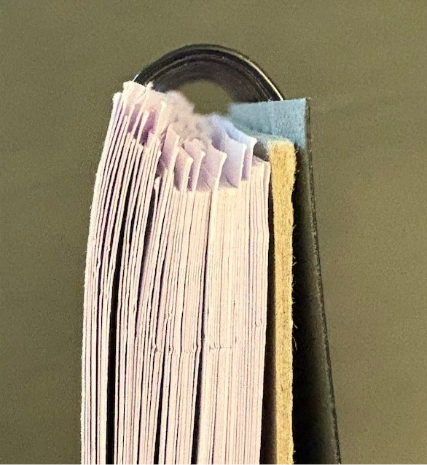
There was some noticeable “buckling” happening at the spiral-bound edge of the notebook. This resulted in regular occurrences of one sheet out of several “riding high” compared to the other sheets. I think this ultimately was the reason for many pages to shift to the left or to the right the further away from the spiral-bound edge they went. This could be an issue when trying to flip pages. By the time I finished using the notebook, it would still fully close but there was noticeable friction when flipping pages and a slight but noticeable bit of resistance to flipping the top cover/used pages completely over (360 degrees).
Gallery
From left to right: Gifted Stationery, Notsu, Field Notes, Franklin Christoph. In the photos below, all notebooks have been completely used (i.e., both obverse and reverse of each page has writing on it).
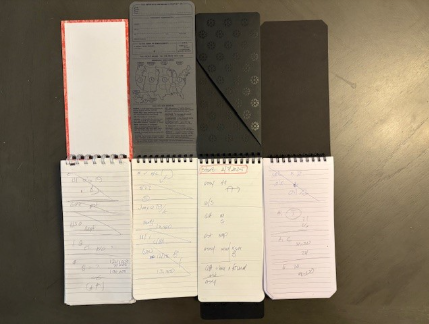
Gifted Stationery
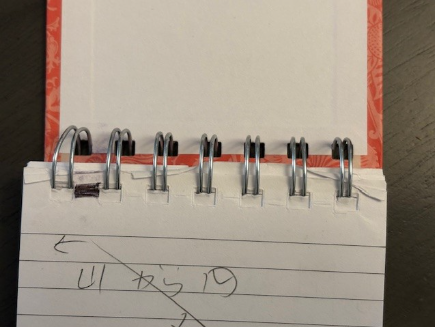
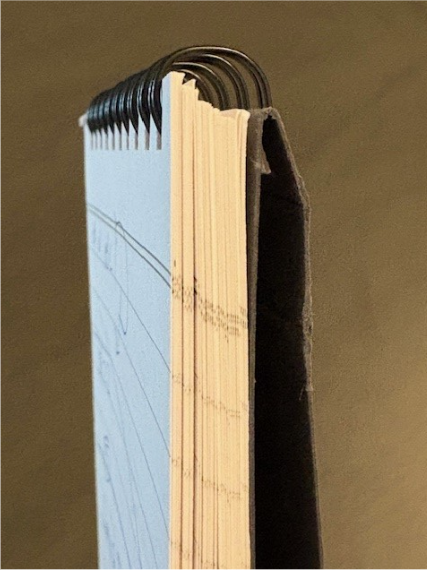
Photo 1: Wear along the bound edge makes flipping pages completely over somewhat difficult and can lead to being unable to fully close the front cover.
Photo 2: Bound edge of the spiral has a little wear. Of the three Gifted Stationery notebooks I had, this was the only one that stayed as flat as this. Both of the others had more buckling around the spiral wire that made it impossible for the cover to lie flat when closed.
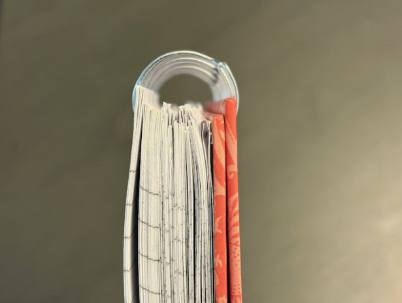
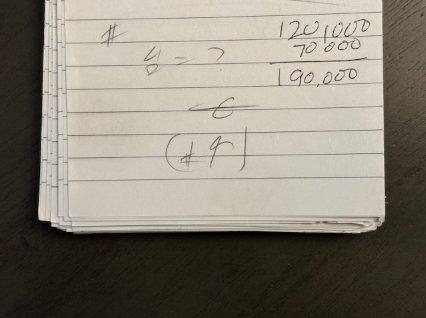
Photo 2: Free edge. Pages no longer align on top of each other.
Notsu
Photos 1 & 2: The bound edge is in near pristine condition even after the notebook was completely filled up.
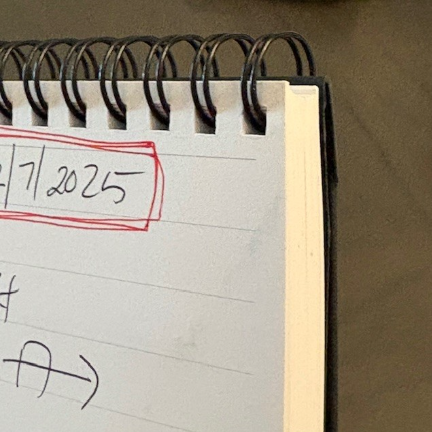
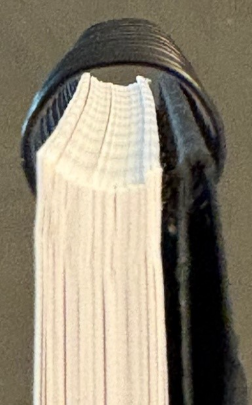
Photo 3 & 4: From the bound edge at the top to the free edge at the bottom, the paper always laid flat. The free edges also stayed aligned which may help some people turn pages more efficiently. There is a dedicated space for noting the date at the very bottom left of each sheet.
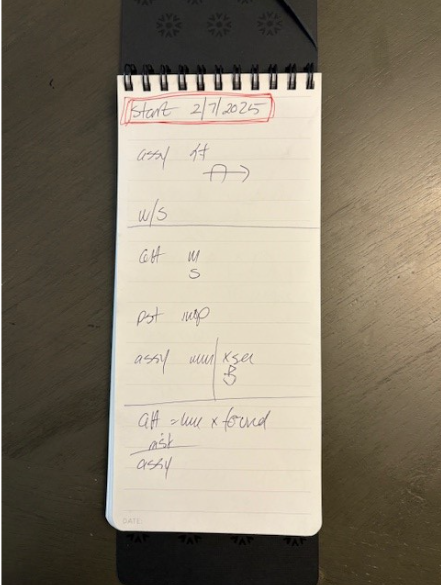
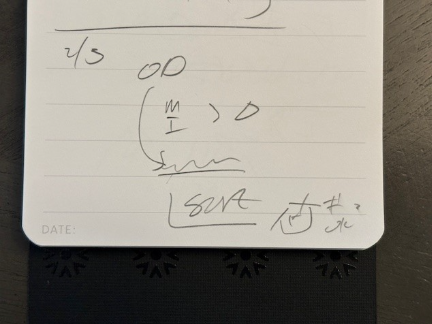
Field Notes
Photos 1, 2, & 3: Pages are aligned and lie flat even after the notebook was fully used.
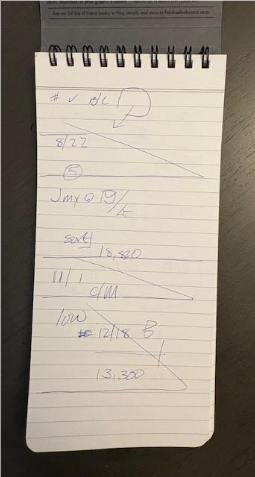
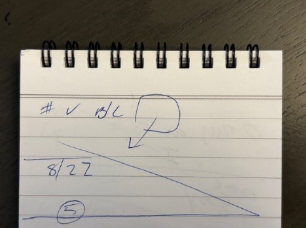
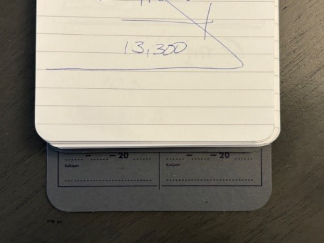
Photos 4 & 5: The bound edge stayed very clean even and pages laid completely flat even after the notebook was fully used.
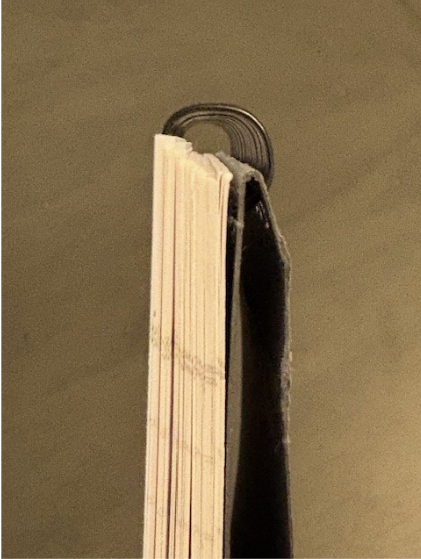
Franklin-Christoph
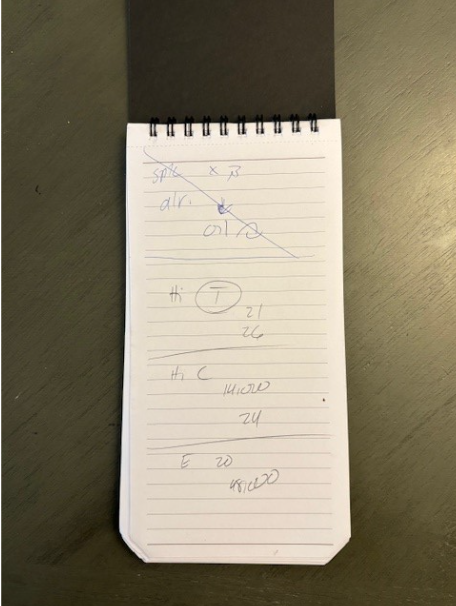
Photo 1: Sheets are mostly aligned and lying flat.
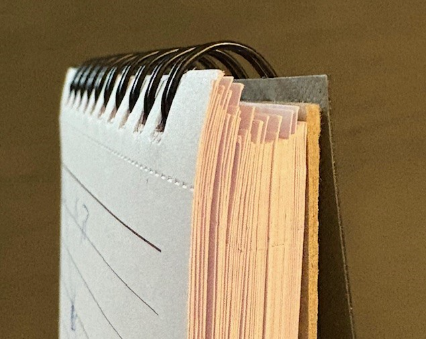
Photo 2: Free edge has some misalignment due to buckling at the bound edge.
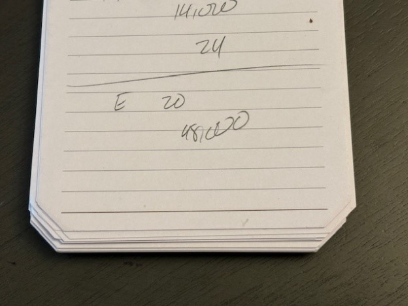
Photos 3 & 4: Flipping sheets caused buckling along the bound edge. Every few sheets, one page would get “stuck,” riding higher than the surrounding pages.
Author: audra lincoln
Editors: Tomoko Herbert, Syra Morii

Leave a Reply