

ATA is happy to announce its shortlist of nominees for the 2026 Lewis Galantière Award for literary translation!
The ATA Galantière Award is given for a distinguished literary translation from any language, except German, into English that has been published in the United States in 2024/25. The award is bestowed biennially in even-numbered years, and the winner will be announced on October 29, 2026, at the ATA’s 67th Annual Conference in San Francisco!
This year’s shortlist includes five outstanding translations into English from French, Japanese, Russian, and Uzbek. The nominees for the 2026 Lewis Galantière Award for literary translation are:
Nevermore (Seagull Books, 2024) by Cécile Wajsbrot, translated from French by Tess Lewis.
People and Trees (Plamen Press, 2024) by Akram Aylisli, translated from Russian and Azeri by Katherine E. Young.
Portraits of a Mother (Yale University Press, 2024) by Shūsaku Endō, translated from Japanese by Van C. Gessel.
We Computers: A Ghazal Novel (Yale University Press, 2025) by Hamid Ismailov, translated from Uzbek by Shelley Fairweather-Vega.
When We Only Have the Earth (University of Nebraska Press, 2025) by Djibouti poet, novelist and essayist Abdourahman A. Waberi, translated from French by Nancy Naomi Carlson.
In describing the merits of each translation under consideration for the Galantière Award, the jury provided the following statements:
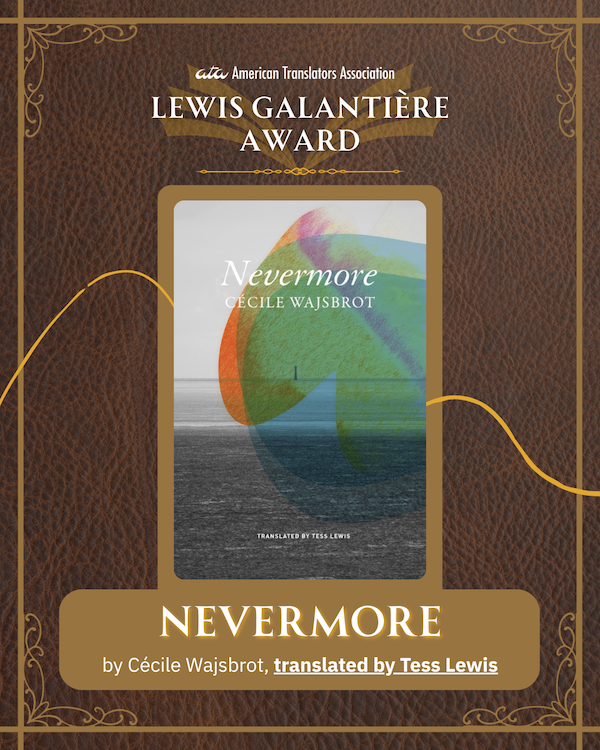
Nevermore (Seagull Books, 2024) by Cécile Wajsbrot, translated from French by Tess Lewis. A meditation on loss, ephemerality, recovery, and the art of translation itself, this novel follows an unnamed translator who has retreated to Dresden to translate the “Time Passes” section of Virginia Woolf’s To the Lighthouse from English into French. Readers are in good hands with accomplished translator Tess Lewis, whose complexly structured translation provides a roadmap for dealing with the sticky business of translating a book about a translator’s experience translating Woolf. The result is both a compelling novel and a timely meditation on language and the craft of translation in our AI-inflected present.
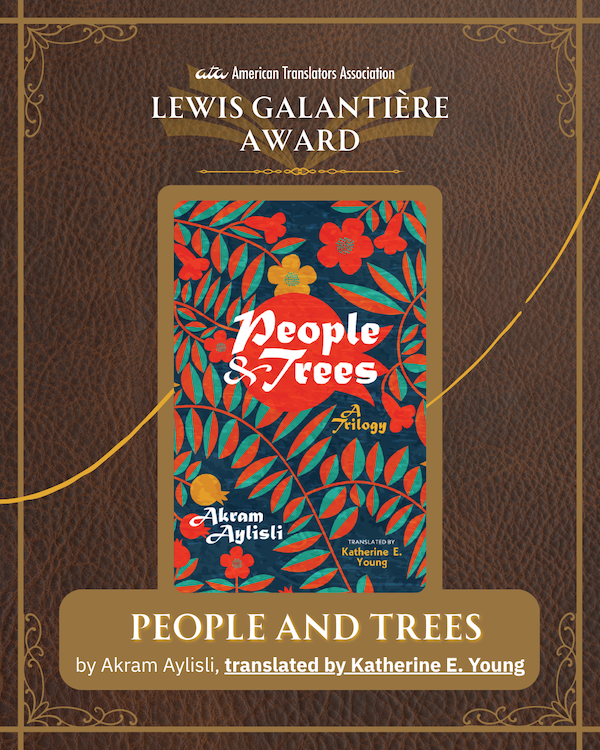
People and Trees (Plamen Press, 2024) by Akram Aylisli, translated from Russian and Azeri by Katherine E. Young. From Azerbaijan’s greatest living author, this collection of tales draws on the folklore of the Caucasus mountains as it documents the transformation of traditional Azeri society under Soviet rule following WWII. Translator Katherine E. Young has done commendable work researching two source languages from different language families in an effort to incorporate many terms from a rare language (Azeri). People and Trees is exemplary as a translation that promotes cultural awareness. Young’s translation beautifully articulates the elegiac style of the source.
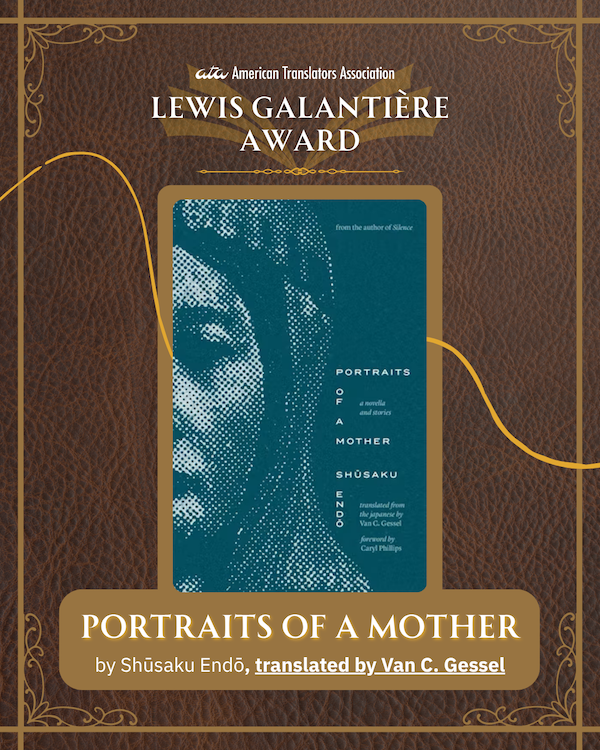
Portraits of a Mother (Yale University Press, 2024) by Shūsaku Endō, translated from Japanese by Van C. Gessel. From one of Japan’s greatest twentieth-century writers, this collection of a newly discovered novella and five stories explores faith, loss, and the enduring power of maternal love. Van C. Gessel provides a masterclass in translation, lovingly rendering Endō’s style and tone in this evocative, highly personal book that is effectively a psychograph, containing elements and themes that appear repeatedly in the author’s fiction. As Endō’s primary translator into English, Gessel has translated nine of the author’s works and has been recognized internationally for his lifetime achievement as a translator of modern Japanese fiction.
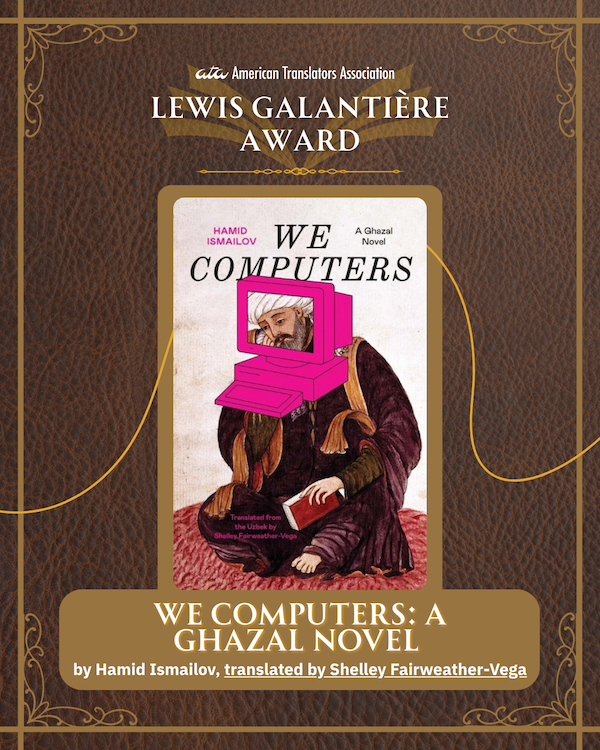
We Computers: A Ghazal Novel (Yale University Press, 2025) by Hamid Ismailov, translated from Uzbek by Shelley Fairweather-Vega. Set in the late 20th century, this postmodern novel weaves together 14th-century Sufi poetry, 19th-century poètes maudits, and 21st-century artificial intelligence to explore the essence of poetry, love, and authorship. Shelley Fairweather-Vega’s masterful translation not only brings Uzbek smoothly into English, but also Persian, French, and Russian. She also successfully renders the novel’s myriad register changes, seamlessly incorporating a computer’s linguistic breakdown, re-translating dozens of well-known quotes from world figures, and changing tone from academic treatise to romantic interlude to formally constrained ghazal and other poetic forms in this tour de force of literary translation.
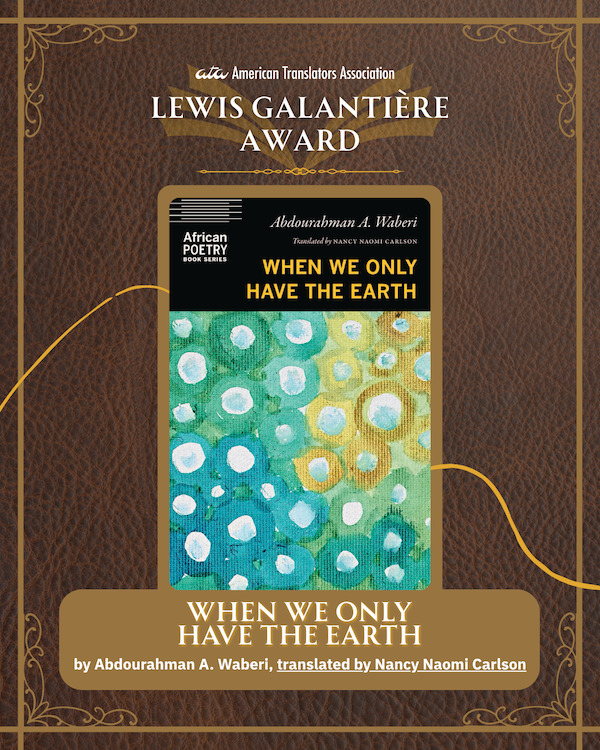
When We Only Have the Earth (University of Nebraska Press, 2025) by Djibouti poet, novelist and essayist Abdourahman A. Waberi, translated from French by Nancy Naomi Carlson. These lyrical poems employ elements of music, wordplay, and humor to explore themes of nature, human connection, and the fleetingness of time. Nancy Naomi Carlson’s meticulously crafted translation offers beautifully balanced poems that authentically recreate the careful interplay of meaning, music, and rhythm in English. This excellent work of translation also fills an important gap, introducing readers to poetry from a Francophone country that has been underrepresented in English translation.
Jury members were Erin Riddle and Matt Griffin (co-chairs), Chen Du, Mercedes Guhl, Natalia Postrigan, Steve Smith, Liza Tripp, and Melody Winkle.
Thanks as well to the many ATA members who volunteered as readers for the 53 books (from 19 languages) submitted for this year’s award. Honors and Awards Committee Chair Sijin Xian was also essential to this year’s success, working with the publishers and coordinating with ATA’s readers and the jury.