

by Matt Griffin
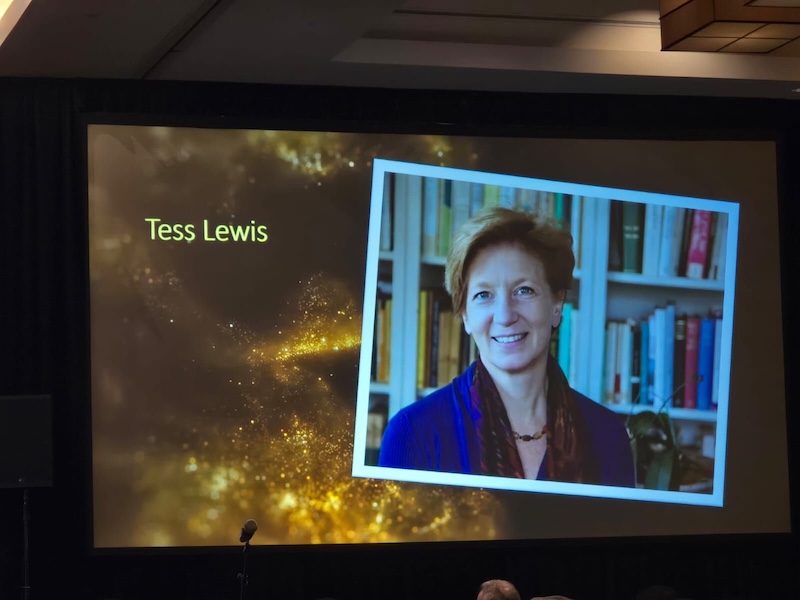
Congratulations to Tess Lewis, the winner of the 2025 Frederick Ungar German Translation Award for her translation of Star 111 by Lutz Seiler. The ATA Ungar Award is presented in odd-numbered years to recognize a distinguished literary translation from German to English. Named after Frederick Ungar, a publisher, translator, and recipient of ATA’s Alexander Gode Medal, the award honors accuracy, excellence, and artistic integrity in translation.
In selecting the winner, the members of the Ungar Award Committee – Erin Riddle (chair), Tim Gregory, Matt Griffin, Steve Smith, and Melody Winkle – recognized Tess Lewis’s translation as an outstanding example of the translator’s art. Star 111 is a skillful, idiomatic translation of an important contemporary novel about the period in East Germany after the fall of the Berlin Wall and during the early years of German reunification.
Tess Lewis is a translator who consistently works at a high level – she translates from both French and German – and her work has received numerous awards, including a PEN Translation Prize. Visit www.tesslewis.org to learn more about this year’s Ungar Award winner. Tess was unable to attend this year’s conference. However, she sent us the following acceptance speech, which she has generously agreed to share here.
Tess Lewis: Acceptance Speech
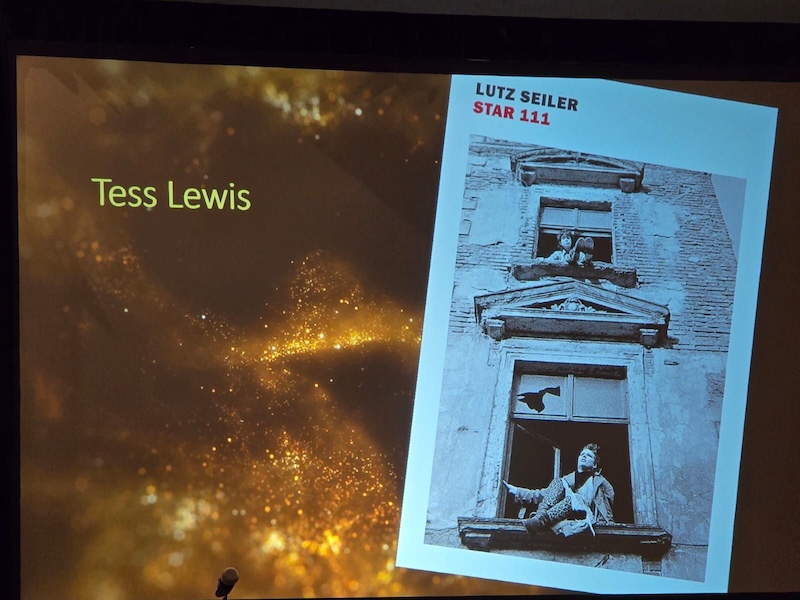
I am deeply honored to receive the Ungar German Translation Award and would like to thank the American Translators Association, this year’s jury, and the late Frederick Ungar for their celebration of translation, translated literature, and German-language literature. I’m especially touched by this recognition from a jury that not only appreciates the challenges of translation but also understands the intricacies involved in mediating between German and English and between their respective cultures and literary traditions. On top of that, it is a true honor to join the company of the previous Ungar Awardees, many of whom have been my heroes and guiding lights for decades. Thank you from the bottom of my heart. My gratitude also extends to Stefan Tobler, the translation’s publisher at And Other Stories press in the UK. A gifted translator from German himself, Stefan is also a generous, patient, and inventive editor, and Star 111 is a better book for his care. In his poem, “in field latin,” Seiler evokes natural and cultural landscapes as “archive[s] of slippery tradition.” His fiction offers a more discursive exploration of these slippery traditions that are so important in the moment, yet so ephemeral in a rapidly changing world. One of the central and slipperiest traditions animating Star 111 is the flawed but vibrant socio-cultural world that disappeared along with the German Democratic Republic.
An expansive portrait of a poet as a young man, Star 111 captures the brief season of utopian anarchy in Berlin immediately following the fall of the Wall. Through the adventures and misadventures of assorted idealists, artists, idlers, and eccentrics, this novel recreates the heady atmosphere of hope and disorientation, revolutionary utopianism, and opportunism that filled the ruined former capital in 1990. Seiler conveys the sense of liberation and possibility felt both by the East Germans who left for the west and by those who stayed behind, but without sentimentalizing either group. The result is a dispassionate study of political romanticism in a time of upheaval and the suffering it inevitably entails but often disregards.
Star 111 raises a number of timely and urgent questions, including that of how to establish an authentic, independent existence against the pull of powerful, seductive political and ideological currents. In our increasingly nationalistic present, these currents seem to be growing ever stronger. Time and again, in fact, with increasing frequency, we see the disastrous consequences of political, cultural, and linguistic isolationism, of looking at the rest of the world with a mistrust and condescension that stems in no small part from willful ignorance.
Translated fiction can help dispel that ignorance and offers a powerful antidote to the pull of those dangerous currents. We need the visions of idealists, artists, and eccentrics from around the world to help us imagine the impossible. Thank you again for recognizing my effort to share Lutz Seiler’s vision.