
Photo by Ian Schneider on Unsplash
This year marks our CLD colleague Jessie Doherty’s 20th year in the profession. Yifeng’s editor-in-chief, Sijin Xian, recently sat down with Jessie to talk about her journey. From discovering interpreting through an intensive note-taking course in college to working as a staff interpreter at ICANN, Jessie’s career has taken her across continents and disciplines. In this conversation, she reflects on the skills that matter the most in the field, memorable assignments that shaped her perspective, and how interpreters can prepare for the future of the profession.
Sijin: Jessie, thank you so much for talking with us today. We’ve really been looking forward to this interview because you’ve had a long and successful career as a conference interpreter. Could you walk us through your training background and career path?
Jessie: Thank you so much, Sijin. I wouldn’t necessarily call myself “successful,” but I do have some experience. For the past 20 years, this is the one thing I’ve been doing, so I hope I’ve learned enough lessons to pass something on to younger interpreters and help them avoid some of the mistakes I made.
As for how I became a conference interpreter, it was definitely a process. I majored in financial management in college because all our textbooks were in English, and I was very interested in Western economics. Then, in my junior year, I took a course in notetaking for interpretation. At the time, interpretation was very much a new concept in mainland China. Even though my English was good, I had never really heard of “interpreter” as a profession.
That course was extremely intensive: 18 days, 10 hours a day, focused almost entirely on notetaking, using press conferences of the Chinese Ministry of Foreign Affairs as practice materials. After those 18 days, I was hooked.
About half a year later, after a lot of practice, I passed an interpretation certification exam offered by Beijing Foreign Studies University. At the time, the pass rate was around 10%, so passing it on my first try gave me a lot of confidence. It made me think that maybe this was a path worth pursuing.
I then started teaching at the same interpretation school where I had taken the course. For more than five years, during winter and summer breaks, I taught notetaking. I was very young at the time—I think I was about 21—and many of my students were graduate students, so I had to work extremely hard for every class. That experience taught me how to teach, how to explain concepts clearly, and how to overcome my shyness to speak in public. Without it, I probably would not have become a good conference interpreter, because it helped me develop a lot of the soft skills the profession requires.
After college, I worked briefly at a translation company. That was my first real exposure to market-facing translation. The market has its own standards—formatting, punctuation, acronyms, terminology conventions, client expectations—and that experience gave me a strong practical foundation as a technical translator. What I learned there was that no matter how well you do in school, when you enter the profession, you must start from zero. You must be humble, listen tentatively, and learn from mentors and colleagues.
After that, I enrolled in a very prestigious program, the Chinese-European Conference Interpreters Training Centre (CECITC), jointly run by the University of International Business and Economics in Beijing and the EU’s Directorate-General for Interpretation.
It was a two-year program from 2007 to 2009. The first year focused mainly on consecutive interpreting—gradually building up to 20-minute segments—along with sight translation and public speaking. The second year focused on simultaneous interpreting. Looking back, that program really laid the foundation for my professional life—not just in terms of skills, but also in terms of friendships, professional connections, and my understanding of the industry. This was the beginning of my career as a conference interpreter.
Sijin: What a remarkable journey. And what eventually led you to your ICANN role?
Jessie: I was lucky, I would say. After graduation, my husband and I got married, had a child, and moved to the United States in 2011. It took me about a year to get my green card, and while I was waiting, I also took and passed the ATA certification exam.
Once I was able to work, I started looking for opportunities through platforms like ProZ.com. At the time, I didn’t really know where to begin, so I read books on freelancing, including How to Succeed as a Freelance Translator by Corinne McKay, and tried to follow the advice I found there.
Because of my training background with the EU program, I was very fortunate to be chosen as one of the first contractors for the Chinese team at ICANN. I started as a contractor in late 2012, and by September 2013 I was hired as staff.
One reason I was hired, I think, was that I could do both translation and interpretation. A lot of interpreters either don’t translate or don’t want to translate, and some translators can’t interpret. Being able to do both gave me an edge. That’s something I often tell younger professionals now: expand your skill set, because the market values versatility.
To be continued: Part II will be posted in April 2026.
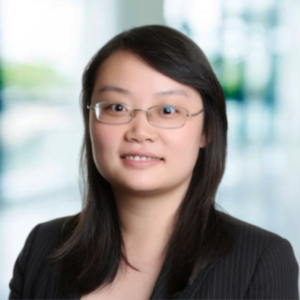 With nearly 20 years in the language field, Jessie is an AIIC member and EU-accredited Chinese–English conference interpreter who loves bringing clarity to complex multilingual settings. She is also an ATA-certified translator and CHI™ interpreter, experienced with RSI platforms and CAT tools. With added coding skills for website localization, she enjoys blending technology with human-centered communication. Outside work, Jessie paints in oils and watercolors, sketches flowers, gardens, and crafts. A proud mom to three furry babies, she lives in Memphis, TN with her husband, son, and mother—her daily source of joy and inspiration.

Leave a Reply