

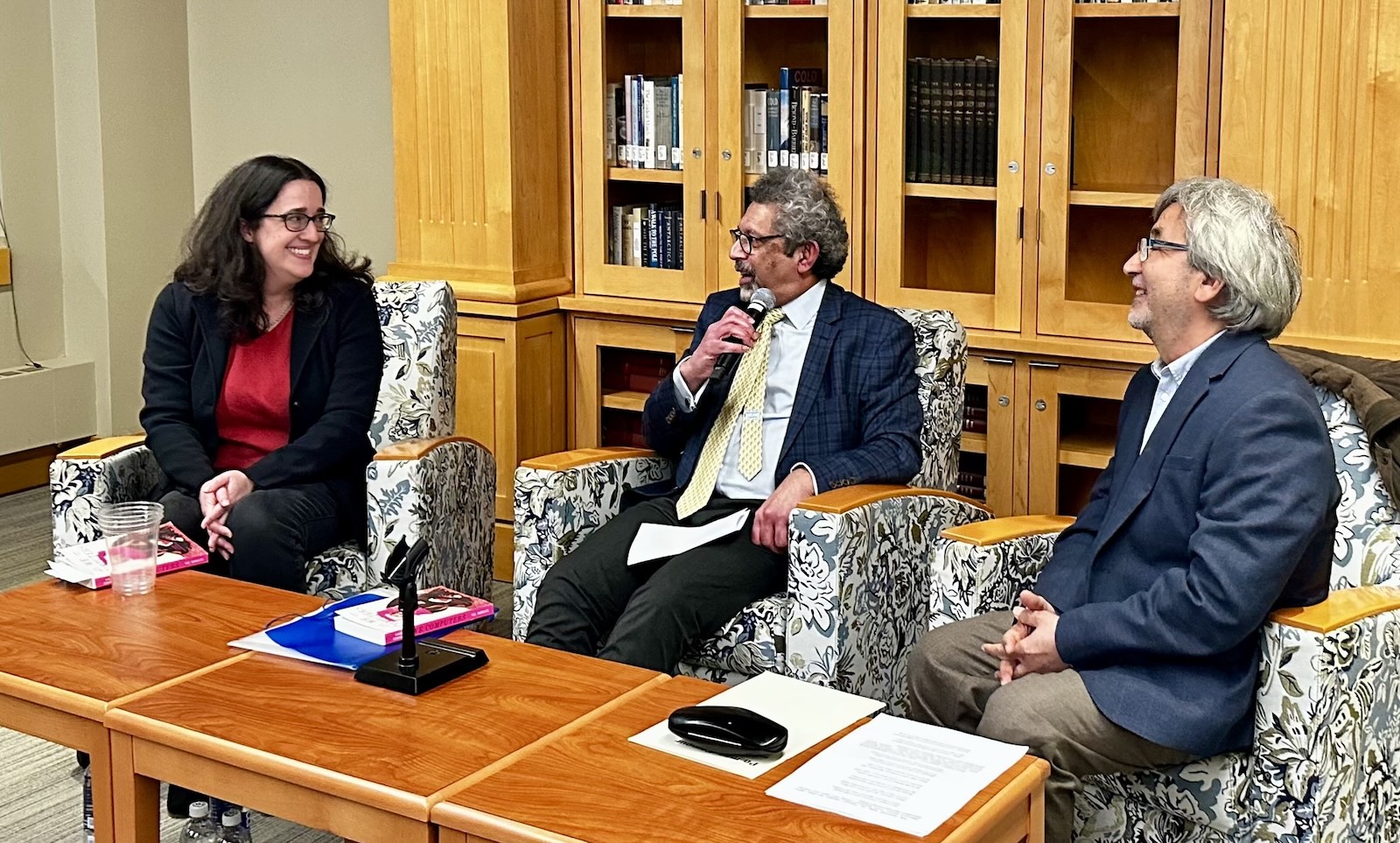
Lit Div members already know Shelley Fairweather-Vega as our tireless former administrator and as the translator of We Computers by Hamid Ismailov, which was shortlisted for the National Book Award for Translated Literature. Jen Mendez spoke with her about a range of topics, including the Uzbek language, her award nomination, going on a book tour, and tackling translating over-the-top love poetry.
Jen Mendez: What is your connection to Uzbek and what initially drew you to the language and the culture?
Shelley Fairweather-Vega: The first foreign language I studied thoroughly was Russian. I was in the Russian, Eastern European, and Central Asian Studies program at the University of Washington for my Masters degree and before that I had had a series of jobs working either in Russia or with the Russian language, so I was using the language all the time and translating as part of those jobs. But during my Masters program, I had run out of Russian classes to take and I noticed they were offering Uzbek, which I had never studied before. And not only were they offering Uzbek, but they were offering FLAS [Foreign Language and Area Studies] scholarships to study it. I had already had one for Russian for the first year of my Masters, but I didn’t think they would give me another one because Russian is a language everyone used to study, so I applied for Uzbek instead. So I spent the spring of the first year of my Masters and all that summer in intensive Uzbek, and the other Uzbek classes in my second year were Uzbek literature. So I started studying Uzbek through translation, which is basically what we did in these little seminar classes. We’d sit there with a short story and kind of figure it out sentence by sentence together. So that’s how I started translating Uzbek as well.
JM: Did you have any knowledge of the language before that?
SF-V: No, not at all. Uzbek’s a Turkic language, which is a completely different set of vocabulary and different grammar, different sentence structure, than the Romance languages and Slavic languages I had studied before. So there were a lot of unfamiliar things to it. But the Uzbek professor at UW basically gave me private lessons at first. Her first courses with me were just crash courses in Uzbek grammar, so I learned everything about the grammar and sentence structure before I started learning the vocabulary—which is a really backwards way of learning a language and not the way that anybody teaches, but it worked for me at that time [laughs]. I started translating Uzbek—legal documents and simple things—and then I started translating essays and short stories and novels. I had never visited the country and I don’t have a family connection or anything like that, so words on a page are what Uzbek is to me. That’s what I’m used to working with.
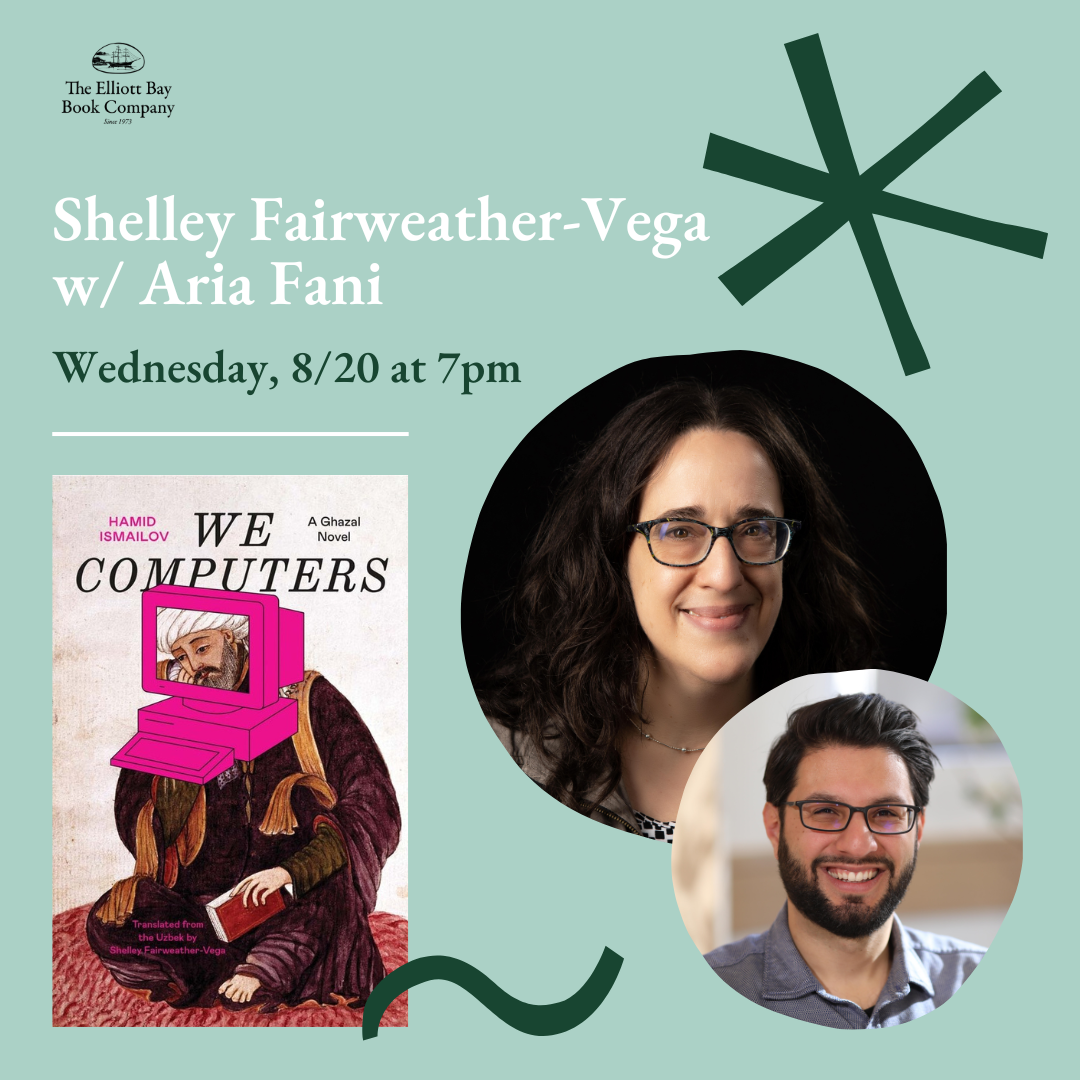
JM: And this led to you being shortlisted for We Computers. Can you tell me about how you found out? Did the emotions hit you right away?
SF-V: Oh yeah, it was crazy. There’s no clue ahead of time that you’ve been longlisted for the National Book Awards. The book came out at the end of August and for the first few weeks after it came out, I would Google the book everyday to see if there were reviews or if there was anything new on Goodreads. I was Googling one morning, waiting for my kid to go to school, and I saw a link that said “National Book Awards Longlist” or something, [and I saw] “We Computers by Hamid Ismailov, translated by Shelley Fairweather-Vega.” And I was like, “What?!” I tried to click on the link, but there was a paywall and I couldn’t see anything, so I tried to search other ways. And I remember saying out loud to my husband, “I think I’ve been longlisted for a prize?” But I didn’t know. A few minutes later, people started texting me, “Oh my God, congratulations!” And I was like, “Oh, it’s true, and it’s a big deal, it turns out.” I didn’t really know what was coming. I didn’t know that I was supposed to be really excited about it. But other people told me that it was really exciting, so I believed them, and eventually, I got all the details.
About a month later, the shortlist was due to come out, I think on October 8th, and on the evening of October 7th, they actually called me from New York and said, “I have some good news to share!” So I was a little more prepared for that. It was really interesting to see how people’s opinions shifted toward the book all of a sudden. I’ve translated a lot of books and none of them had been longlisted for a prize before, and it comes with all kinds of attention I wasn’t used to getting. Even the author, Ismailov, he’d had one book win the EBRD prize, but that wasn’t one that I translated. The books I had translated for him got good reviews, but not a lot of attention, so this was a new experience for us as a team.
JM: How did the accolade impact your work? Did you see an uptick in demand for Uzbek translations?
SF-V: I wish! I was hoping for immediate fame and fortune and tempting job offers for all these books. What did change is that people started asking me to speak more often. I have all these new invitations to write essays and travel and do talks, so that’s nice. It helped with sales for the book, for sure. It’s now my bestselling book ever, even though it’s also one of the weirdest and strangest books I’ve ever translated. But it didn’t result in a bunch of new translation contracts, and the reason for that is that the same problem exists as before, which is no one knows about what’s being written in Uzbek—or Kazakh or Kyrgyz. I find out about these books when the authors or somebody I know from the region writes to me and says, “There’s this cool novel, you should look at it.” And then I’m the one who has to tell American publishers about it and try to convince them to pay attention and give it a chance. So everyone may think that I’m an award-winning translator now—or at least an award-nominated translator—but they’re not saying, “I have a lot of books that she would be great at translating.” They’re just waiting for me to bring them more, so I have to continue the work that I was doing before of finding the books and trying to talk publishers into [publishing] them. So that part has stayed the same.
I did notice—I’ve been submitting manuscripts to publishers as I always do and I got a really nice rejection from one instead of just not answering my e-mail at all [laughs]. I think maybe the editor had recognized my name and looked me up and thought, “Oh, I should be really nice to her when I reject this one.” So that’s a perk, I guess! She gave me feedback and said some nice things about the translation. That’s a nice change.
The exception is Yale University Press, which published We Computers. Even before the awards ceremony, they had already signed another novel by Ismailov for me to translate, so that’s one. But that’s the home publisher, the publisher who’s excited about their book and selling more copies of it and getting more attention. They wanted to follow up right away. I suppose that’s one job I got because of the nomination. I’m not sure it would have come so quickly if it hadn’t gotten that attention from the National Book Awards.
JM: I was doing some research and saw that the novel is based on the poetic form of the ghazal. From a translation perspective, that would be very difficult to work with. How did you navigate the challenges of maintaining the integrity of the poetic form while adapting it for an English-speaking audience?
SF-V: Thanks for asking. I also read up a lot on ghazal when I realized I was going to have to deal with them in this book—because I wasn’t very familiar with the form—and the first thing you find when you search “translating ghazals” is an article by Dick Davis, who’s a very famous translator of Persian into English. He wrote an article called “On the Impossibility of Translating the Ghazal” [laughs]. And then he translated a lot of them. He translated the whole collection by Hafez. Everyone loves his translations—they rhyme and they’re pretty, and it’s nice. But he claimed that it was impossible. The form is alien to English and it doesn’t work with the sentence structure—and the imagery is too repetitive and seems too stale and too cliché for an English ear. All these different stylistic and structural problems. But obviously he thought he could do it, and he did it, and I have also done it in my own way.
The fortunate part for what I had to work on is that I didn’t have to start from a blank slate. I had my ghazals already in a novel—a novel that is about those ghazals. And the novel has things to say about the ghazals and interprets them in a certain way, so that was my guide. Like, “this ghazal has to be pretty in this way, and it has to be ironic in this way, and this imagery is really important, so I’m going to keep the prettiness and the irony and this particular image. Even if I think it’s corny or whatever, we’re gonna do it because it’s important for the plot of the novel.” So I was translating the poems according to the plot and then trying to make sure they all fit together the way that they do in Uzbek. It’s amazing how the poetry and the storylines interweave with each other in the book. So that was my task: I had to translate them in a way that would respect those particular constraints presented by the book itself. That made my job easier because then I had rules to follow.
JM: I was reading that ghazals are used to express an almost supernatural love, so it makes sense that it would be very over-the-top and maybe a little bit cheesy for an English-speaking audience.
SF-V: Absolutely. They’ve always been love songs, not just poetry. Even in English, love songs are not subtle and understated. They have to gush. I was thinking of soft rock from the 70s and 80s—those things rhyme, unashamedly, and they’re about desperate love and everyone wants to sing along. They’ve got some magic and it works, and we can do that with these ghazals as well.
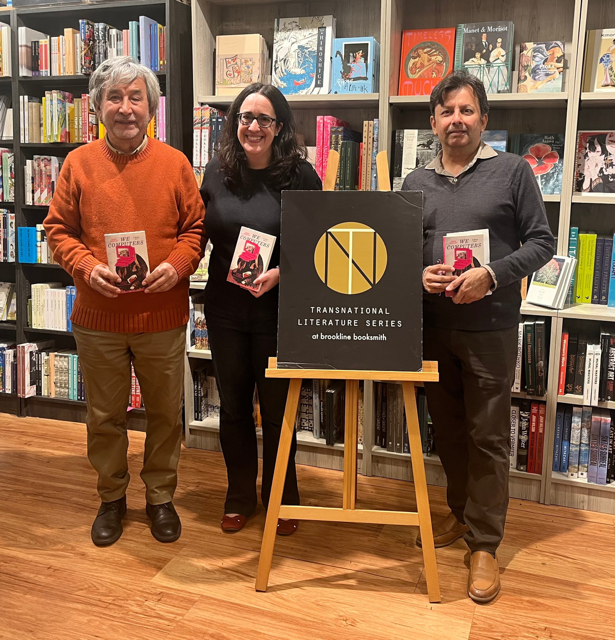
JM: You did a tour to promote We Computers with Hamid Ismailov. What was your role as translator on the tour?
SF-V: Well, my first role was that I had to set it up [laughs]. The press said they didn’t have the resources to do anything and Ismailov really wanted to come. He had been here once before and we spent part of that time touring around together. We talked together in Seattle and Portland a couple years ago, and that was fun. So I started e-mailing mostly professors from different universities because we also needed to be paid to do it. We needed to be able to buy our plane tickets and things, and the publisher wasn’t able to help. So we cobbled together a tour of five different universities, some of which would pay for a couple nights in a hotel, plus a plane ticket to the next place. Then the next person would pay for another night in a hotel and buy us dinner and breakfast and another plane ticket. So eventually we cobbled together this whole strange itinerary. It was three weeks in total with the ALTA [American Literary Translators Association] conference on one end and an Area Studies conference in Washington DC on the other end—and in the middle was the prize ceremony, as it turned out. We started planning the tour before we knew we were nominated for the prize and before we knew we’d have to be in New York for the ceremony. We canceled an appearance at George Washington University and went to the prize ceremony in Manhattan instead.
For most of our appearances, we appeared together and people would ask questions about how he wrote the book and what it means to him, and ask me questions about what it was like to translate it, and so on. It was fun, and I hope it was good for audiences, too, to be able to talk to the author and translator at the same time and hear both of our stories. Plus, we can do awesome readings. He’s a great reader in Uzbek and I can read the English. Teamwork.
JM: Did you get a lot of questions about your translation process?
SF-V: A few, yeah. I always want more [laughs]. And sometimes they’re really elementary questions like, “How do you translate tone?” Or, “How do you translate humor?” They’re good questions, but not something you can just sit down and reveal the secret of. And sometimes they’re more specific, like people who knew one of the languages or knew something about the history of the book.
JM: You are going to be a judge for the prize that you were shortlisted for. Can you talk a little about how that came to be?
SF-V: The same people who always coordinate the prize, who I kind of knew already, e-mailed me and said, “We’d like to invite you to be a judge this year.” And I suspected I might get recruited to do this. I’ve talked to other translators who have won prizes and they’ve told me, “and then you have to be a judge, you have to pay it forward.” But it sounded like fun to me, and it has been fun so far. We’re completely sworn to secrecy about the process—I can’t even say what books I’m reading or what’s been nominated or not nominated, nothing about how we make decisions. But I can tell you that there’s five of us—writers, professors, literary people, there’s a bookstore guy. That’s public, our bios are online. We’ve had a couple meetings so far and we talk about books. It’s really fun. I’m looking forward to it. I’ve got a big pile of them already—they’re trickling in from publishers now, so almost every night, I get to sit down with a translated book and check it out. And then I get to go to the black-tie awards ceremony again this November.
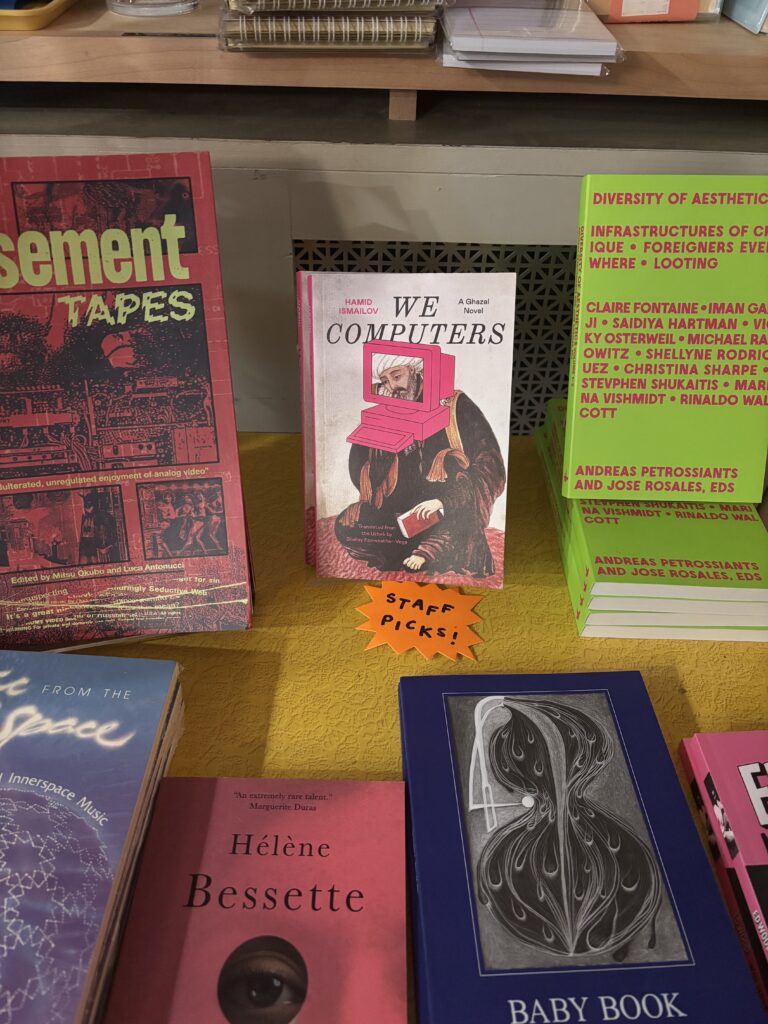
JM: Do you have any closing words of inspiration for your fellow literary translators or people who are aspiring to be where you are now?
SF-V: It did occur to me that I should encourage all literary translators to judge a prize, if they can. I think it would be worth it for lots of them. ALTA needs extra readers in different languages for their awards. They send out an e-mail asking people to step forward if you know German, for example—“we need someone to read 20 pages of German and compare it to the translation, this book is under consideration, we need expert readers to report on the translation quality.” ATA has their literary prizes that need readers every year. As a translator, it’s so much fun to read what your colleagues are doing, even if it’s not a language that you work in or a genre that you usually work in, just to see what people come up with as translators and what they can do to a text in English. It’s so educational and it’s so much fun—and most of what you read is pretty good because not a lot of bad translations get published [laughs]. So you’re not going to run into a lot of really painful mistakes or terrible prose. But if you do, that’s educational, too. I would encourage everyone to do that if you get a chance. It’s good for your volunteer karma and it’s good for your translator’s brain, too.
Shelley Fairweather-Vega
is a past administrator of the ATA Literary Division and a co-founder of the Northwest Literary Translators, part of the Northwest Translators and Interpreters Society, an ATA chapter, in Seattle, Washington. Shelley teaches translation workshops, runs training and networking events for translators, and is a professional translator of Russian and Uzbek, specializing in poetry, fiction, and scholarly publications, with a focus on new literature from Central Asia.
Jen Mendez
is the vice president of the Northwest Translators and Interpreters Society, a regional chapter of the ATA. Jen plans and coordinates professional events for translators and interpreters and is an active member of the Northwest Literary Translators. They are a Portland-based German to English translator of literature, songs, and poetry.