By Xinyuan (Hope) Zhang
If you come from a non-interpreting major, breaking into medical interpreting can feel like navigating an unmapped forest—even with a strong language foundation. Without a two-year MTI/MIIS degree on my resume, I needed a tactical path to build immediate market credibility. That path was national certification, specifically the Certified Medical Interpreter (CMI) credential.
Now, over 1,000 hours of dedicated efforts later, I passed the CMI exam and established my professional practice. The journey involved a lot of trial and error, but here is the streamlined blueprint I would use if I had to start all over again.
The Strategic Choice: CMI vs. CHI
My market research showed that hospital systems and language service providers (LSPs) use national certifications as an initial indicator of credibility and competence. In the U.S., this comes down to two primary credentials: the Certified Medical Interpreter (CMI) and the Certified Healthcare Interpreter (CHI). For me, the CMI-Mandarin pathway emerged as the optimal choice because the exam does not include a simultaneous interpreting component, and it can be taken from home.
For a more detailed breakdown, see this video comparison (in Mandarin).
The Three Pillars of CMI Mastery
Passing the CMI and becoming a clinically ready interpreter rests on three structural pillars:
Pillar 1: Building the Medical Knowledge Tree
To master medical knowledge, you must combine a top-down framework with bottom-up learning:
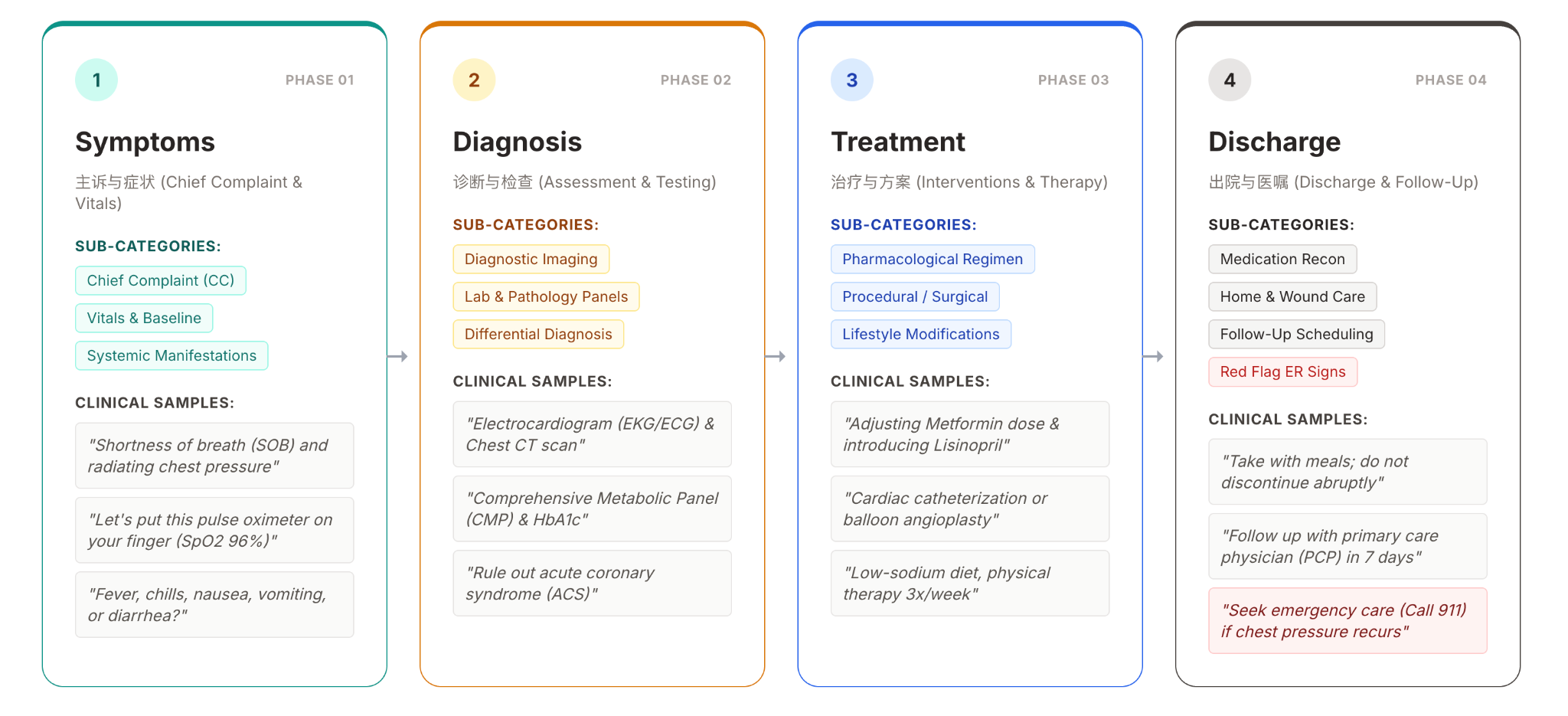
- Top-Down Mapping (The Trunk): Yes, you will need to memorize many medical terms— roughly 600 to 1,000 depending on what you already know. Don’t do it randomly. Instead, group medical knowledge by major body systems. For each system, master the top 10 most common clinical conditions along the entire care continuum:
Symptoms → Diagnosis → Treatment → Discharge Instructions.
A good source to find this information is the Mayo Clinic website. For example, their COPD page explains the symptoms, causes, diagnosis, and treatment for this pulmonary condition.
- Bottom-Up Vocabulary Harvesting (The Leaves): A structural trunk without leaves cannot thrive; without granular vocabulary, your clinical framework withers. I recommend building flashcards and personalized glossaries, harvesting terminology system by system. Remember to include audio in your practice because listening and speaking are essential for interpreting.
- Real-World Clinical Practice: Doctors often use conversational framing for vitals (“Let me get your vitals,” “Put this on your finger,” “Your blood pressure looks beautiful!”) or spend significant time on medication reconciliation, e.g., checking changes in diabetes regimens (Metformin, Insulin) or side effects since the last visit. Mastering these conversational clinical flows is key. Instead of expecting textbook phrases, be attentive when you listen, and render the actual utterances.
Pillar 2: Mastering Role Boundaries & Ethical Agility
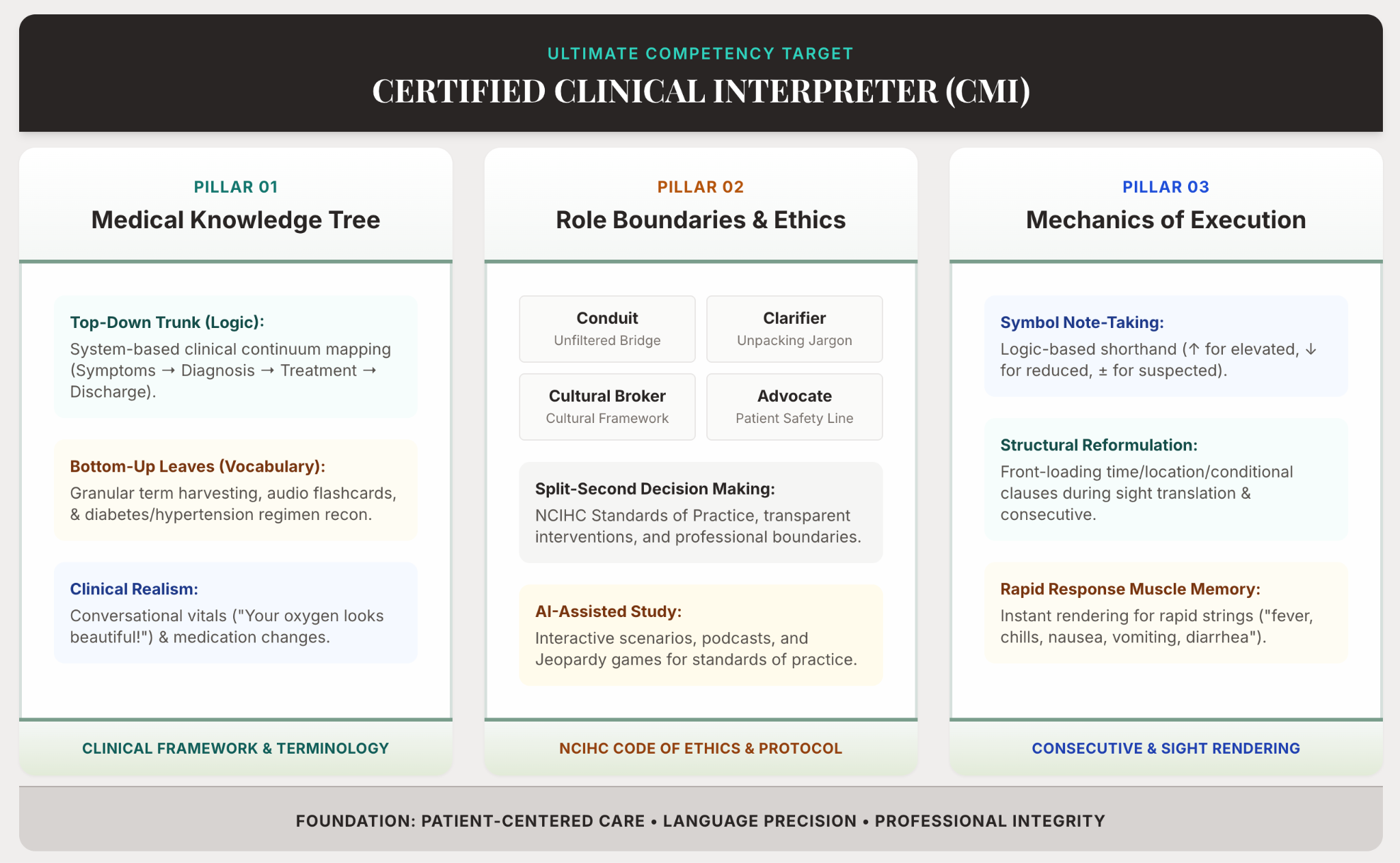
The ethical portion of the CMI exam tests your split-second judgment under the standards of the National Council on Interpreting in Health Care (NCIHC). Successful interpreters learn to navigate four dynamic roles—Conduit, Clarifier, Cultural Broker, and Advocate—while maintaining strict psychological and professional boundaries. Knowing when and how to intervene without overstepping into clinician or patient autonomy is the hallmark of true competence. I understand how “boring” this can sound. One way to avoid falling asleep while studying standards of practice and codes of ethics is using AI to create interactive study tools—like infographics, podcasts (check out this episode I created using Gemini), or Jeopardy-style games.
Pillar 3: Mechanics of Execution: Notes, Reformulation, and Rapid Response
Passing the oral performance exam comes down to practical execution mechanics:
- Symbol-Based Note-Taking: Clinical conversations move fast. Build a clean, symbol-based note-taking system for consecutive interpreting so your mind can focus on logic and relationships rather than shorthand spelling.
- Real-Time Structural Reformulation: English and Chinese syntax often work in reverse. Practice front-loading time, location, and conditional clauses during sight translation and consecutive rendering, breaking complex physician sentences into clean target-language chunks.
- Muscle Memory for High-Frequency Lists: Doctors routinely throw out rapid strings of symptoms (“Any fever, chills, nausea, vomiting, constipation, or diarrhea?”) or baseline checks. These high-frequency bundles shouldn’t require mental processing during the exam. They should become muscle memory, allowing instantaneous recall.
The Tactical Execution Engine: 5 High-Yield Hacks
To translate these pillars into exam success, you need a practical execution engine. Here are five hacks I found most useful on my journey.
1. Start with the End (Reverse-Engineer the Exam)
I started by carefully reviewing the official NBCMI candidate handbook and taking a diagnostic mock exam to establish my baseline, focusing on meeting the minimum viable requirements first.
To close the gap in my skills and fulfill the CMI requirement, I enrolled in the ALTA 40-hour medical interpreter trainingprogram, which provided structured instruction and simulated clinical encounters. To squeeze every ounce of value out of the training:
- “Destroy” the Textbook: Underline, highlight, write on it. Repetition matters when you are acquiring a new “language.”
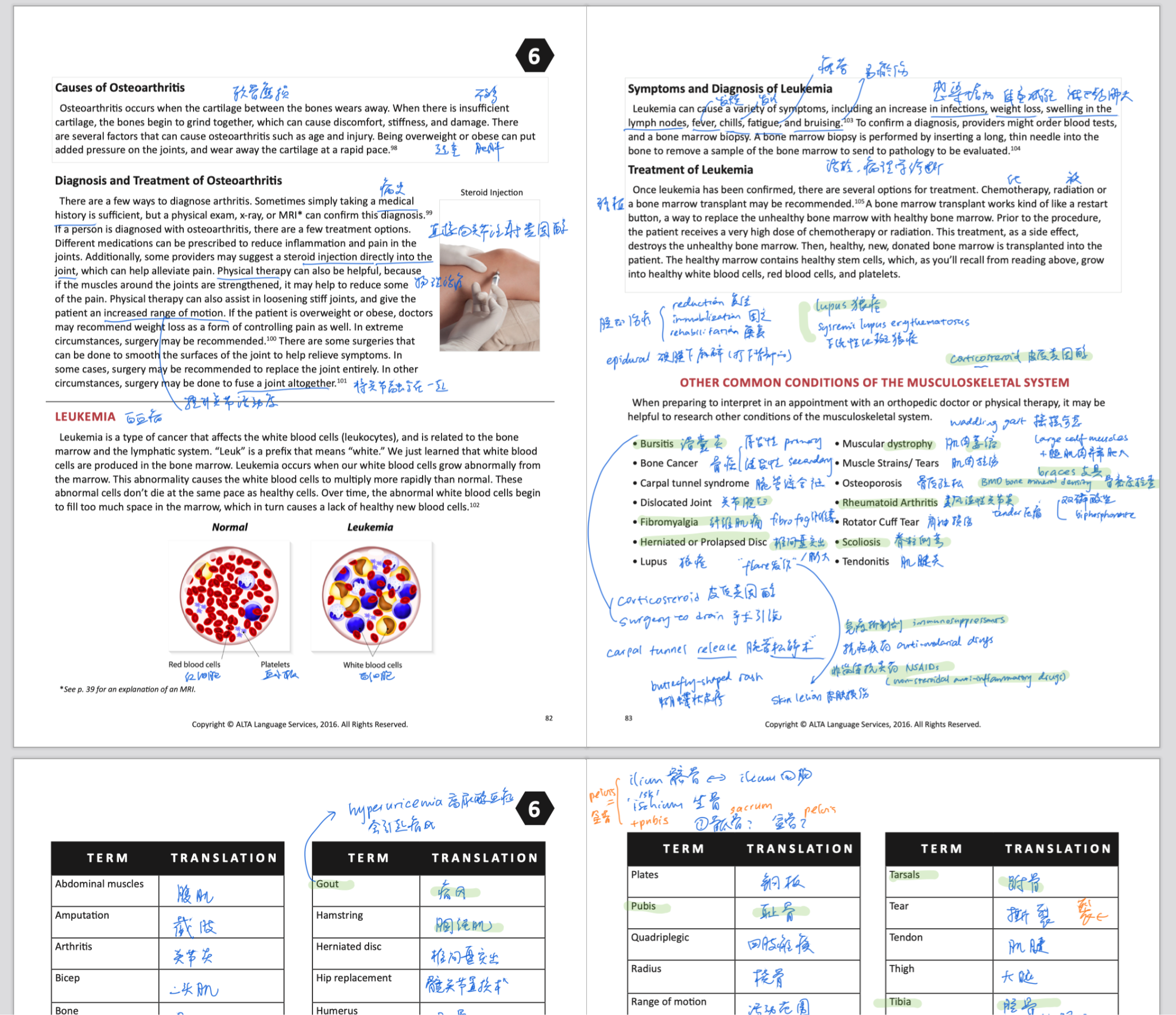
Photo: Xinyuan’s textbook with annotations, including information from various sources.
- Master the Roleplay Materials: Conversations for consecutive interpretation are the holy grail of practice materials. It is closest to what you are tested on later and what you need to interpret in real life. I have practiced most conversations at least four times, each with a different mentor/partner.
- Attend ALL Live Sessions: Take both the English-only and Mandarin-specific sessions. Instead of waiting until I had finished the slides and videos, I started attending mentored sessions from day one. The instructors are seasoned professionals and will share tips and tricks if you take the initiative to ask.
- Leverage Course Forums: Use the discussion boards to find dedicated practice partners. I posted a “Call for Partners” message that connected me with two highly competent peers. One of them is still my close friend in the industry, and we are now working towards court interpreter certification together.
2. Tap Into Targeted Platforms and Tools
I complemented formal training with high-yield, accessible study tools:
- Mason, the Interpreter YouTube Channel: Outstanding for realistic exam simulations. His free training playlist remains a staple resource.
- InterpreMed: A rich repository of challenging medical vocabulary and practice scenarios.
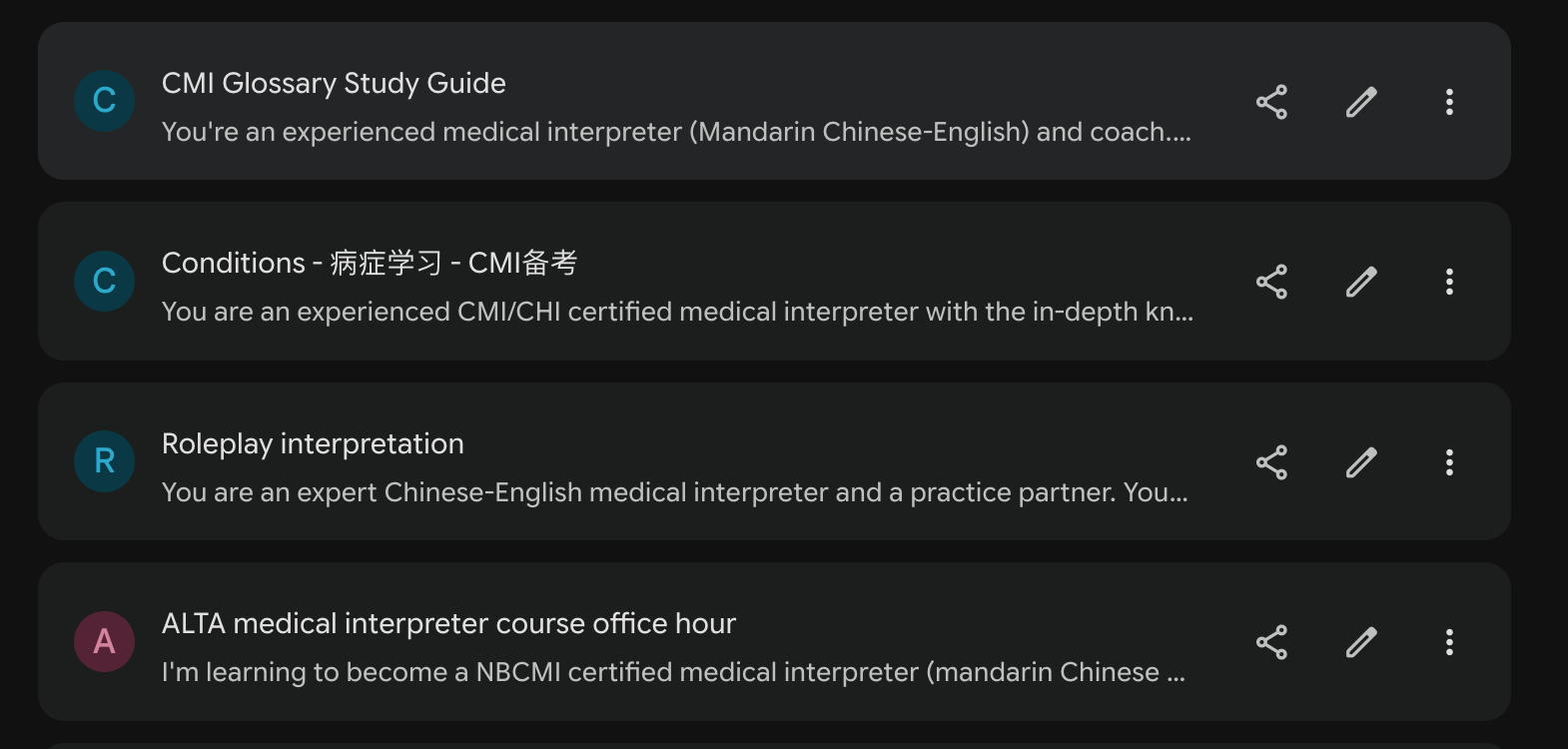
- AI Prompts as Mentors: Basically your personal mentor, infinitely patient when explaining scenarios, teaching vocabulary, and providing context for medical knowledge. And no, it is not replacing us yet—but that is a discussion for another time.
3. Learn in Public (Become Your Own Content Creator)
When I couldn’t find study materials tailored to my exact learning style, I built them myself and documented the journey publicly on Xiaohongshu. I created terminology flashcards with my own voice over, shared custom AI study prompts, and posted candid updates on my exam experience and job search progress.
This learning-in-public approach resonated widely, eventually attracting almost 14,000 learners. Teaching others kept me accountable and helped me retain terminology far faster than studying in isolation.
4. Apply Before You Feel 100% Ready
Waiting until you feel 100% prepared to apply for jobs is a trap. I started sending out resumes early to test the waters and analyze what employers were actually looking for. The feedback from initial agency screenings showed me exactly where my terminology and protocol knowledge fell short, allowing me to adjust my study priorities accordingly.
5. Healthcare Insurance & Public Benefits Literacy (The Real-World Blind Spot)
While certification handbooks focus heavily on clinical anatomy, real-world remote interpreting (OPI/VRI) involves endless conversations around coverage, billing, and public benefits. Understanding the distinction between Medicare (红蓝卡) and Medicaid (白卡), knowing state-specific Medicaid names (such as Medi-Cal in California or MassHealth in Massachusetts), and mastering terms like SSN verification, Prior Authorization, Copay, and Deductible will elevate you from a test-taker to an industry-ready professional.
Owning Your Narrative
Breaking into medical interpreting is an empowering journey of continuous growth, clinical discipline, and meaningful human connection. Passing the CMI wasn’t just about earning a credential—it proved that with strategic execution, dedication, and a commitment to patient-centered care, anyone can build a thriving and impactful practice. Trust your preparation, embrace the learning process, and take that next step with confidence.
 Xinyuan (Hope) Zhang is a CMI-Mandarin certified interpreter based in Chicagoland. With a professional background in UX and content strategy, she applies iterative learning methodologies to create system-based frameworks for mastering medical terminology and clinical ethics. Xinyuan regularly documents her learning journey and shares resources with her community on Xiaohongshu. She is currently preparing for court interpreter certification and remains dedicated to advancing language access, patient-centered care, and non-traditional career paths in the field.
Edited by Luyi Yang and Sijin Xian.

Leave a Reply