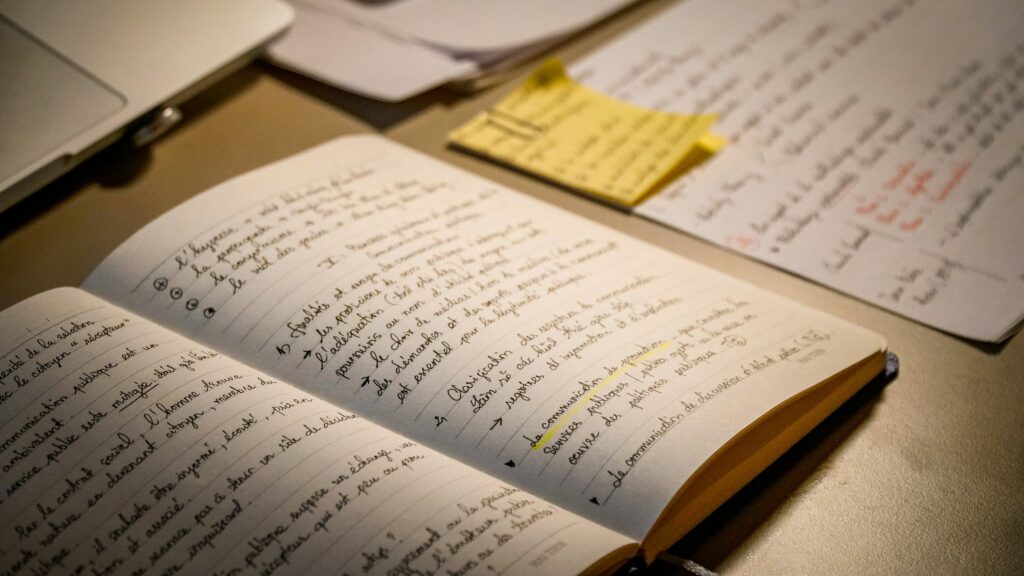
By Danielle Maxson, CT

I don’t consider myself a violent person, but studying French grammar sometimes tempts me to throw things at a wall. Why is that “s” at the end of this past participle but not that one? Why did they use “à” instead of “de”? And whose idea was it to reserve an entire tense for reading only and never use it in speech?
As a French learner, I sometimes don’t understand why the language works the way it does. It sounds beautiful, but since I’m trained in Spanish, a much more phonetic language, French can seem impenetrable at times. Despite the similarities between the two languages, I often wish I had a roadmap to help me navigate the grammatical differences.
So, in what was perhaps a burst of unfounded optimism, I decided to enroll in a French-based Advanced Skills and Training (AST) session at the 2025 ATA Conference in Boston. “French-Language Master Class: A Deep Dive into Advanced Grammar” promised an in-depth study of how to use the participe passé, when to use the subjunctive mood, and how to avoid several common mistakes made by native speakers of both English and French.